Rani Padmini — The Full Story of Chittorgarh's Legendary Queen
Who Was Rani Padmini?
Rani Padmini (also known as Padmavati) was the queen of Chittorgarh, wife of Rawal Ratan Singh, the ruler of the Mewar kingdom in early 14th-century Rajputana (present-day Rajasthan). She is believed to have been a Sinhalese princess, originally from Singhal Dweep (modern-day Sri Lanka), renowned throughout the subcontinent for her extraordinary beauty, sharp intellect, and fierce pride. The earliest literary source that tells her story is the epic poem Padmavat, written in 1540 by the Sufi poet Malik Muhammad Jayasi, over 200 years after the events it describes.
The Siege of 1303 — How It Began
The story begins with Alauddin Khilji, the Sultan of Delhi, who led an empire at the height of its power. According to legend, a treacherous courtier named Raghav Chetan was banished from Chittorgarh for practising black magic. In revenge, he went to Alauddin Khilji's court and described the unparalleled beauty of Rani Padmini, inciting the Sultan's obsession. In 1303, Alauddin Khilji marched his massive army to Chittorgarh with a singular, stated purpose — to possess the queen. He besieged the fort with an army reportedly numbering 150,000 men.
The Mirror Glimpse — Fact or Legend?
The most famous episode of the story — where Alauddin Khilji is permitted to see only a reflection of Padmini in a mirror (or through a reflecting pool) as a compromise — is one of the most debated moments in Indian history. Historians are divided on whether this event actually occurred. The story appears in the later poem Padmavat but is absent from the contemporary accounts of Alauddin's reign written by his own court historian, Amir Khusrau. Whether legend or fact, the episode has been endlessly romanticised in Indian art, literature, and film for 700 years.
The First Jauhar of Chittorgarh (1303 AD)
After months of siege, when it became clear that the fort would fall and the Rajput men would die in battle, Rani Padmini led what historians record as the first great Jauhar of Chittorgarh. Jauhar was the Rajput practice of mass self-immolation by women of the royal household to protect themselves from capture and dishonour in defeat. Padmini descended into the underground chambers of Rana Kumbha Palace with hundreds of noble women. A massive pyre was lit, and they walked into it singing devotional songs. The men of Chittorgarh then threw open the gates and charged the enemy in a battle to the death — this final charge is called Saka.
Historical Evidence vs. Popular Legend
Modern historians approach the Padmini story with caution. The earliest historical reference to the siege of 1303 — from Amir Khusrau's Khazain ul Futuh — does confirm that Alauddin Khilji conquered Chittorgarh and executed a massive portion of the population. However, it makes no mention of Padmini by name. The poet Jayasi wrote Padmavat in 1540 as an allegorical Sufi poem, not as a historical account. Historians like Prof. Satish Chandra note that the legend may be more spiritual allegory than literal history, while the human tragedy of the 1303 siege itself is thoroughly documented and real.
Padmini Palace Today — Where to Visit
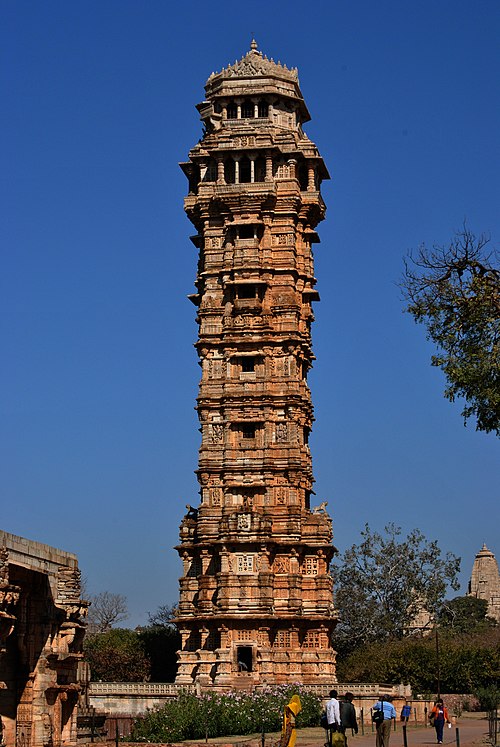
The Padmini Palace within Chittorgarh Fort is a beautifully preserved pavilion surrounded by a lotus pool, located in the southern section of the fort, approximately 1.5 km from the Vijay Stambha. The current structure was likely built or rebuilt during the 15th–16th century. A decorative screen at the entrance supposedly marks the precise spot where Alauddin Khilji stood to see Padmini's reflection. Entry to the palace grounds is included in the general fort entry. Allow 45 minutes to fully explore and appreciate this atmospheric site.
Padmini's Legacy in Culture & Cinema
Rani Padmini's story has inspired thousands of artistic works across 700 years — from folk ballads sung in Rajasthani villages to major Hindi films. The most controversial modern depiction is Sanjay Leela Bhansali's 2018 film Padmaavat (starring Deepika Padukone as Padmini), which sparked massive protests from Rajput community groups who felt the portrayal dishonoured their ancestor. The controversy only underlines how deeply personal and alive this historical-legendary figure remains for the people of Rajasthan today. A visit to Padmini Palace, standing in the very spot where this epic story unfolded, makes that connection visceral and real.
Explore more legends of Mewar
Read The Mewar Chronicles →